| stock_h1_2026 | Muscat Daily | 2026-06-27 | 2026-08-10 | https://www.muscatdaily.com/2026/06/27/first-oman-made-ev-charging-ecosystem-launched/ | Reports MTCIT figures: more than 5,900 registered EVs, more than 160 charging points and 350 target by 2027. |
| green_drive_2026 | Muscat Daily | 2026-06-20 | 2026-08-10 | https://www.muscatdaily.com/2026/06/20/green-transport-drive-puts-oman-on-fast-track-to-net-zero/ | Corroborates 5,900 EVs, charging and specialised maintenance-centre tender status. |
| target_8000 | The Arabian Stories | 2026-06-02 | 2026-08-10 | https://www.thearabianstories.com/2026/06/02/oman-targets-8000-electric-vehicles-by-end-of-2026/ | Reports 5,800 EVs and 8,000 end-2026 target from Oman Centre for Net Zero official. |
| stock_nov_2025 | Oman Sustainability Week | 2025-11-18 | 2026-08-10 | https://omansustainabilityweek.com/news/electric-vehicle-adoption-a-practical-and-economical-option | Reports NCSI figure of 2,182 registered EVs; the 428 comparator conflicts with other official statements and is not used for growth. |
| stock_2024 | Times of Oman | 2024-09-21 | 2026-08-10 | https://timesofoman.com/article/150074-300-rise-in-number-of-electric-vehicles-in-oman | MTCIT undersecretary reported 550 EVs in 2023 and 1,500 in 2024. |
| stock_2023 | Times of Oman | 2023-11-01 | 2026-08-10 | https://timesofoman.com/article/137960-number-of-evs-in-oman-exceeds-400 | Point-in-time 2023 evidence: more than 400 EVs and 100 charging points. |
| ona_stock_2023 | Oman News Agency | 2023-11-01 | 2026-08-10 | https://omannews.gov.om/topics/ar/7/show/425140 | Primary ONA version of 2023 EV and charging figures. |
| mtcit_green | Ministry of Transport, Communications and Information Technology | — | 2026-08-10 | https://test.mtcit.gov.om/sectors/land-transport/green-mobility | Official programme dashboard: 2,200 EVs and 160 chargers for 2025, 350 chargers targeted for 2027. |
| ona_green | Oman News Agency | 2023-05-16 | 2026-08-10 | https://www.omannews.gov.om/topics/ar/7/show/417832 | Primary programme targets for transport decarbonisation and public charging. |
| chargers_2026 | The Arabian Stories | 2026-01-12 | 2026-08-10 | https://www.thearabianstories.com/2026/01/12/160-electric-vehicle-chargers-installed-across-oman-says-transport-minister/ | Transport minister statement: 160 chargers installed and 200 additional planned. |
| chargers_90_sites | Oman News Agency | — | 2026-08-10 | https://omannews.gov.om/topics/en/79/show/113254/ona | Official rollout described across 90 locations; site, point and connector definitions must not be added. |
| charging_app | Muscat Daily | 2025-12-22 | 2026-08-10 | https://www.muscatdaily.com/2025/12/22/app-launched-to-integrate-omans-ev-infrastructure/ | Commercial interoperability evidence; its higher charger and vehicle estimates are excluded from core sizing. |
| ngmc | Muscat Daily | 2025-08-31 | 2026-08-10 | https://www.muscatdaily.com/2025/08/31/oman-launches-national-green-mobility-company-to-accelerate-ev-transition/ | Programme roadmap: 500 EVs in 2026 and more than 10,000 EVs plus 200 fast chargers by 2032; not a national forecast. |
| ona_ngmc | Oman News Agency | 2025-08-31 | 2026-08-10 | https://www.omannews.gov.om/topics/ar/7/show/455855/ | Primary ONA version of OMR29m initiative and programme milestones. |
| parc_dec_2025 | Times of Oman | 2026-01-31 | 2026-08-10 | https://timesofoman.com/article/167706-18-million-vehicles-registered-in-oman-by-the-end-of-2025 | 1,851,469 registered vehicles; category breakdown. |
| parc_mar_2026 | Times of Oman | 2026-05-07 | 2026-08-10 | https://timesofoman.com/article/171467-over-18mn-vehicles-registered-in-oman-till-march-2026 | Latest parc comparator: 1,873,803 vehicles including 1,484,718 private, 276,887 commercial and 44,958 rental. |
| ona_parc_2025 | Oman News Agency | 2026-01-31 | 2026-08-10 | https://www.omannews.gov.om/topics/ar/7/show/463020/ | Primary NCSI/ONA year-end parc release. |
| maintenance_tender | The Arabian Stories | 2025-10-07 | 2026-08-10 | https://www.thearabianstories.com/2025/10/07/oman-invites-bids-for-electric-vehicle-maintenance-centre-in-muscat/ | MTCIT Bid 3/2025 for a 2,400 m² integrated centre at Mabela South, Seeb. |
| ev_incentives | Muscat Daily | 2023-05-28 | 2026-08-10 | https://www.muscatdaily.com/2023/05/28/no-vat-customs-or-registration-fee-on-electric-vehicles/ | Original qualifying BEV/hydrogen incentive rules. Current extension after the initial three-year registration/customs window was not verified. |
| ev_incentives_detail | The Arabian Stories | 2023-05-28 | 2026-08-10 | https://www.thearabianstories.com/2023/05/28/0-vat-on-electric-vehicle-and-spare-parts-in-oman/ | Conditions for zero-rated VAT on qualifying vehicles and exclusive essential parts. |
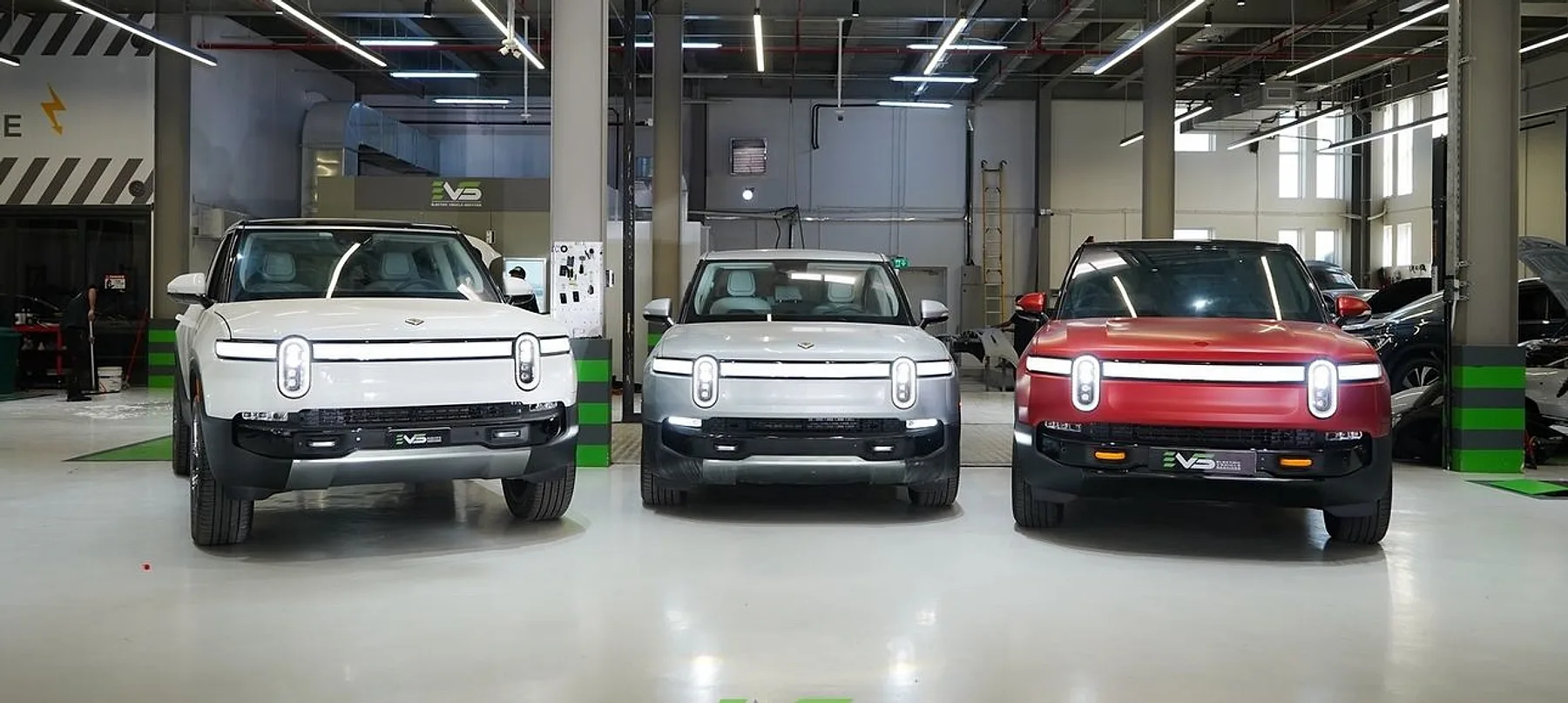
| evs_branch | EVS | — | 2026-08-10 | https://evsksa.com/en/branches/oman/ | Public EVS Muscat branch page, phone and service catalogue. |
| evs_oman | EVS Oman | — | 2026-08-10 | https://evsoman.com/ | Public site lists Entrance Number 1, Rusail Car Market, Seeb; company counters are not treated as Oman-specific facts. |
| evs_about | EVS Oman | — | 2026-08-10 | https://evsoman.com/about | EVS positioning and service claims; not independent evidence of operating scale. |
| evs_ai | EVS Oman | 2026-06-15 | 2026-08-10 | https://evsoman.com/blog/evs-oman-ai-powered-ev-diagnostics-2026 | Marketing evidence of Seeb diagnostic service and named platform coverage; speed/performance claims are not independently validated. |
| byd_oman | BYD Oman | — | 2026-08-10 | https://www.bydoman.com/en/contact | Official Ghala showroom/service contact and local authorised-channel evidence. |
| autotronix | AutoTronix | — | 2026-08-10 | https://autotronix.om/ | Independent multi-brand workshop and membership competitor. |
| amot | AMOT | — | 2026-08-10 | https://www.amotauto.com/ | Rusayl-area independent workshop and ROP-certified inspection proposition. |
| driveon | DriveOn | — | 2026-08-10 | https://driveon.om/ | Mobile maintenance competitor and convenience benchmark. |
| moci_workshops | Ministry of Commerce, Industry and Investment Promotion | 2025-06-30 | 2026-08-10 | https://tejarah.gov.om/en/media/news/j5upmfa1ifgvomhlguw1e19b | More than 13,500 licensed companies; Muscat 3,690; local-ownership structure and activity data. |
| foreign_ownership | Ministry of Commerce, Industry and Investment Promotion | — | 2026-08-10 | https://tejarah.gov.om/en/media/news/dl54v5k46b1tbf4sc132cr5t | 100% foreign ownership in many sectors under Law 50/2019; activity-specific restrictions remain subject to confirmation. |
| invest_faq | Invest Oman | — | 2026-08-10 | https://www.investoman.om/resources/faqs | Headline investment incentives, investor residency and ownership framework; workshop entitlement is not assumed. |
| tax_rates | Oman Tax Authority | — | 2026-08-10 | https://tms.taxoman.gov.om/portal/tax-rate | Official 15% corporate income tax, 3% qualifying small-enterprise rate, 10% withholding and 5% VAT. |
| tax_registration | Oman Tax Authority | — | 2026-08-10 | https://tms.taxoman.gov.om/portal/registration | Income-tax registration and mandatory VAT threshold of OMR38,500. |
| opaz | OPAZ | — | 2026-08-10 | https://www.opaz.gov.om/ | Zone incentives; a domestic Muscat workshop is not presumed eligible. |
| investor_onboarding | Ministry of Commerce, Industry and Investment Promotion | — | 2026-08-10 | https://tejarah.gov.om/en/media/news/kapdeds6capkqqvm4ufoayp1 | Some activities require a local partner or special approvals and Omanisation compliance. |
| labour_law | Decree | 2023-07-25 | 2026-08-10 | https://decree.om/2023/rd20230053/ | Articles 18–30 cover Omanisation and non-Omani labour; Articles 105–107 cover OSH and imminent-danger closure. |
| environment_law | Decree | 2001-11-14 | 2026-08-10 | https://decree.om/2001/rd20010114/ | Core environmental framework. |
| waste_license | Gov.om | 2026-07-02 | 2026-08-10 | https://gov.om/en/w/get-waste-management-license | Hazardous-waste transport, storage, treatment and disposal require licensing; identifies key regulations and reporting. |
| waste_register | Environment Authority | — | 2026-08-10 | https://www.waste.ea.gov.om/en/ | Official registration, licensing and oversight portal for waste generators and handlers. |
| data_law | Decree | 2022-02-09 | 2026-08-10 | https://decree.om/2022/rd20220006/ | Customer, VIN, diagnostic, camera, telematics and cross-border data framework. |
| data_deadline | Decree Blog | 2025-01-19 | 2026-08-10 | https://blog.decree.om/2025/extension-of-the-grace-period-to-comply-with-data-protection-regulation/ | Executive-regulation compliance deadline extended to February 2026; now elapsed. |
| consumer_law | Decree | 2014-11-30 | 2026-08-10 | https://decree.om/2014/rd20140066/ | Core consumer disclosure and supplier framework. |
| rop_renewal | Royal Oman Police | — | 2026-08-10 | https://www.rop.gov.om/english/Vehicle_Registration_renewal.aspx | Official vehicle registration and inspection interface. |
| used_imports | Times of Oman | 2025-04-30 | 2026-08-10 | https://timesofoman.com/article/157506-new-rules-issued-to-import-used-vehicles-from-gulf-countries | From 1 July 2025, GCC imports require official export certificates. |
| muscat_municipality | Muscat Municipality | — | 2026-08-10 | https://www.mm.gov.om/ | Municipal planning, building, lease and local-service authority interface. |
| cdaa | CDAA | — | 2026-08-10 | https://cdaa.gov.om/ | Fire/life-safety authority; site-specific approval must be obtained. |
| evs_model | EVS Worldwide | 2026-08-10 | 2026-08-10 | EVS://Oman/model/2026-08-10 | All forecasts, sizing rates, screening scores, economics and gates are EVS assumptions or calculations. |

 Market Intelligence