
20 Nov 2026 · 12 min read
Car Repair Franchise in Vietnam: EV Competition
Assess Vietnam’s EV aftersales landscape, the key competitors and what franchise partners should weigh before entering this car repair franchise opportunity.
EVS WorldwideRead
EVS Worldwide/Insights
Owners are told electric cars are cheap to maintain. For the workshop on the other side of the counter the cost moved rather than disappeared — out of consumables and into capability. Where it went, and what it means for anyone pricing an EV service business.
Electric cars are cheaper to maintain. It is true, it is repeated in every ownership guide, and from the driver's seat it holds up: no oil service, no plugs, no belts, no exhaust, no gearbox service.
From the other side of the counter it reads differently. The cost did not vanish. It moved — out of consumables, which are cheap and frequent, and into capability, which is expensive and occasional. Any business pricing an EV service operation on the consumer-facing version of that sentence is pricing the wrong thing.
A combustion workshop earns steadily on items it can forecast: oil, filters, plugs, brakes, belts. Volume is predictable, margin is thin and known, and a technician's time converts into billable parts reliably.
An EV workshop earns on knowing what is wrong. Diagnosis is the product. That inverts the economics: fewer visits per car per year, higher value per visit, and a far heavier dependence on the quality of the first hour.
It also means an EV bay can be busy and unprofitable in a way a combustion bay cannot — because a misdiagnosis on a high-voltage system is not a wasted filter, it is a returned car and a repeated job.
Factory-level diagnostic access is the single most underestimated line in an EV workshop's cost base. It is licensed per marque and frequently per workshop, it renews, and it is the difference between reading a fault code and knowing what the fault is.
A generic scanner will tell you a module reported something. It will not tell you whether the module is failing, whether it is reporting a sensor, or whether the real problem is three systems upstream. On a pack, that distinction is the entire invoice.
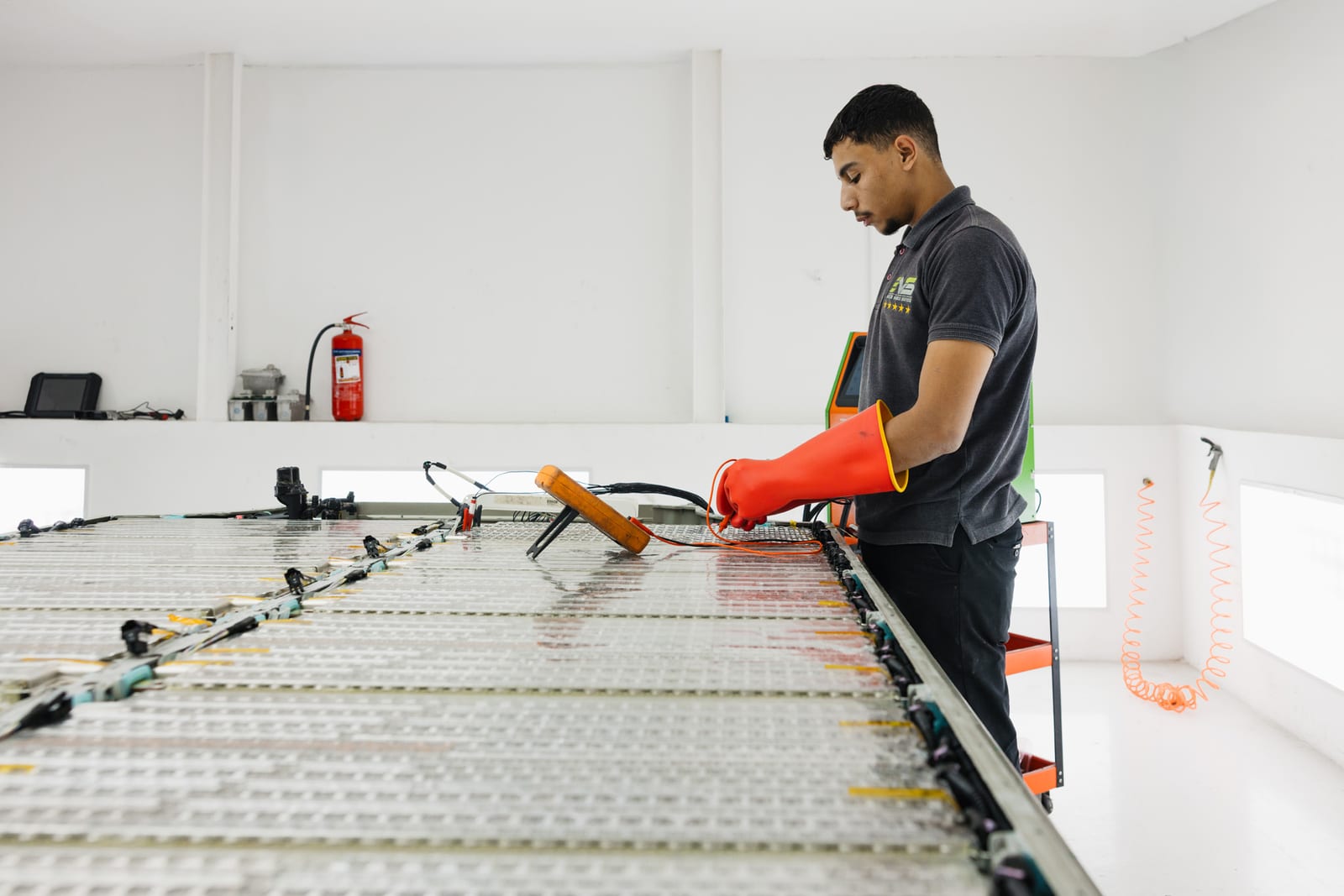
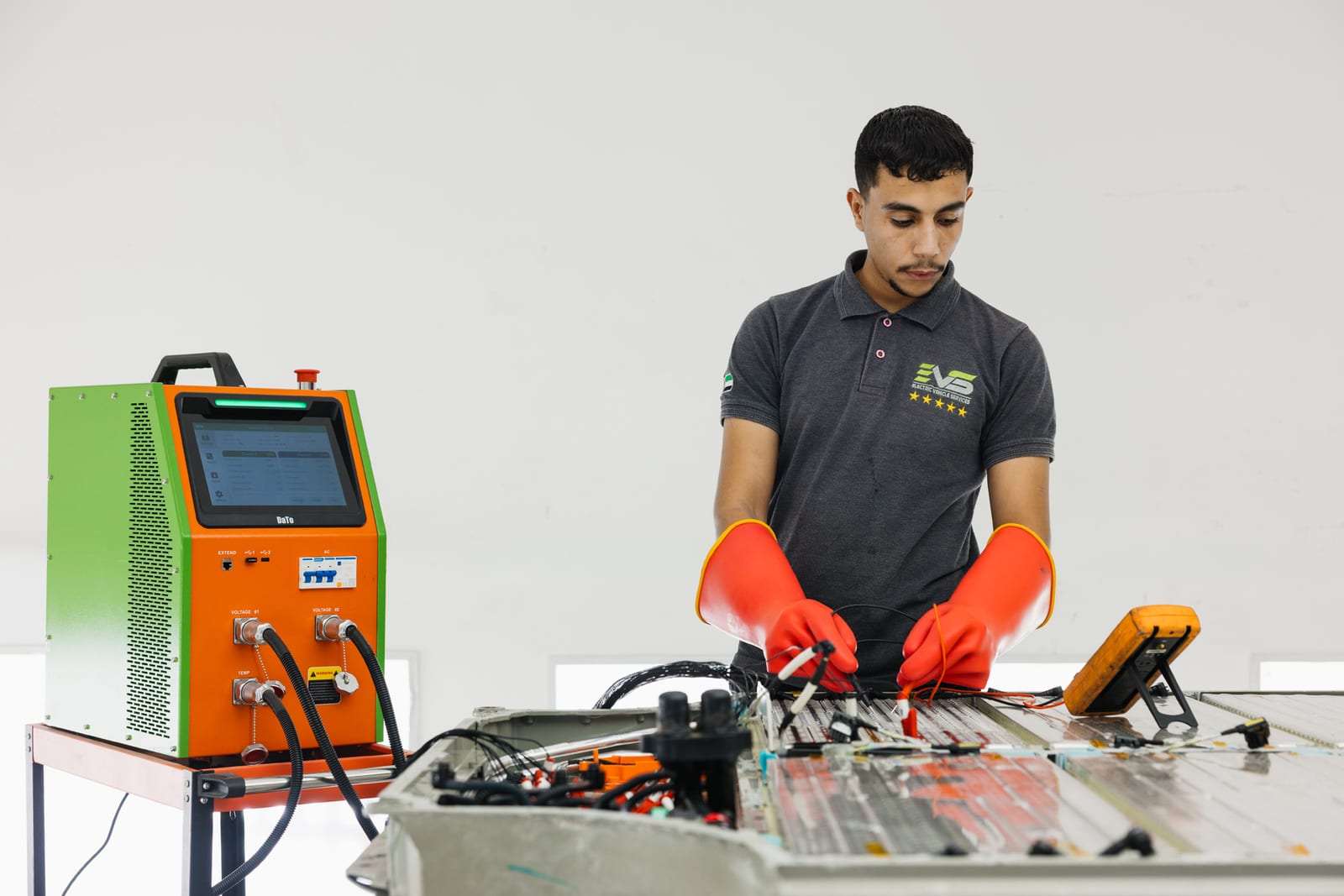
High-voltage competence is not a weekend course. Isolation procedure, insulated tooling, cell and module work, thermal diagnosis — these are trained, certified and kept current, and in several markets the qualification is a legal precondition for trading rather than a nice-to-have.
The hiring market for this does not have depth anywhere. Workshops that assume they will recruit the capability tend to discover they have to build it, and building it takes longer than a fit-out.
In most emerging markets a large share of the EV parc arrived by import, often before the brand had a local presence. Those cars carry another market's region coding, and their parts have no local agent behind them.
Knowing where a component actually comes from, and which software a given car will accept, becomes a core competence rather than an administrative task.
Three consequences follow, and they shape the business more than the equipment list does.
Consumer volume alone will not fill an EV workshop. The service intervals are too long and the consumables too few. This is why fleets, leasing companies, insurers and body shops matter: repeated, contracted, measurable demand that does not depend on an owner remembering to book.
The high-value work is out of warranty. While cars are covered, they go back to the dealer. The independent opportunity begins when manufacturer cover ends, which makes the age profile of a country's parc a better predictor of demand than the number of EVs sold last year.
Capability is the moat, and it is expensive to cross. A general garage can add a tyre bay in a week. It cannot add high-voltage battery capability in a year. That barrier is the whole proposition — and the reason the work exists for anyone who clears it.
The honest answer is that it varies more by country than any global average suggests, and that the averages circulating online are mostly derived from mature markets with dealer-dense networks.
What actually determines the number in a given market:
We publish an assessment per market covering exactly these — fleet size, addressable servicing pool, incumbents, incentives and legal prerequisites. You can find your market in the research library and read the version for the country you are actually looking at rather than a global average.
For the infrastructure side of the same picture, our charging-point data by country is the dataset behind a lot of these assessments, and the global EV maintenance market covers the demand side.
The mistake we see most often is modelling an EV workshop as a combustion workshop with different parts. It is a different shape: fewer visits, higher value per visit, heavier fixed costs in access and training, and a revenue mix that has to lean on business customers rather than walk-ins.
That is a harder business to start and a more defensible one once it runs. We have written up what it takes to open an EV repair shop in more detail, and if you are weighing a territory rather than a single site, the franchise model sets out how EVS structures it.
For the global picture on adoption and fleet growth, the IEA's electric vehicle work remains the most reliable public source, and it is worth reading the trend rather than any single year's number.
For the owner, yes on routine servicing — the oil, filter, plug, belt and exhaust work does not exist. For the workshop, the cost moved rather than disappeared: fewer billable visits, but far higher fixed costs in diagnostic access, high-voltage training and parts sourcing.
Because a generic scanner reports which module raised a fault, not what the fault is. On a high-voltage system the difference between a sensor, a contactor, a coolant intrusion and a failed module is four different repairs at four different prices. Access is licensed per marque and renews.
Enough that the workshop is not dependent on consumer volume, because EV service intervals are too long to fill a bay from private owners alone. Fleets, leasing companies, insurers and body shops provide repeated and contractible demand; consumer work is better used to fill capacity than to carry the business.
Meaningfully. In hot markets the thermal system runs far more hours protecting the pack, so what wears is the cooling hardware rather than the cells. Humid and coastal conditions add a second problem: friction brakes corrode from disuse because regenerative braking leaves them unused.
When manufacturer warranty cover ends. Until then cars return to the dealer. That makes the age profile of a country's plug-in parc a better indicator of addressable demand than annual sales figures.
Not from a global average. Look at the age of the plug-in parc, dealer density, how much of the parc arrived by import, climate, and whether local regulation requires a qualified high-voltage lead. Those five between them explain most of the variance between markets.
02 / Related reading
20 Nov 2026 · 12 min read
Assess Vietnam’s EV aftersales landscape, the key competitors and what franchise partners should weigh before entering this car repair franchise opportunity.
17 Nov 2026 · 12 min read
See what insurers typically expect before routing EV repairs to a workshop: HV safety, battery evidence, calibration, estimates and turnaround.
13 Nov 2026 · 12 min read
Learn what EV technician training and equipment an EV workshop needs to deliver safe high-voltage diagnostics, battery work and fleet contracts.
03 / Not in your country yet?
Tell us your territory. We'll send the market research alongside the franchise pack and connect you with the team behind every EVS centre.