
22 Oct 2026 · 6 min read
The Importance of Battery Health Certification in the EV Service Sector
Explore why battery health certification is crucial for EV resale value and customer trust in the automotive service sector.
EVS WorldwideRead
EVS Worldwide/Insights/Technical
Learn what EV technician training and equipment an EV workshop needs to deliver safe high-voltage diagnostics, battery work and fleet contracts.
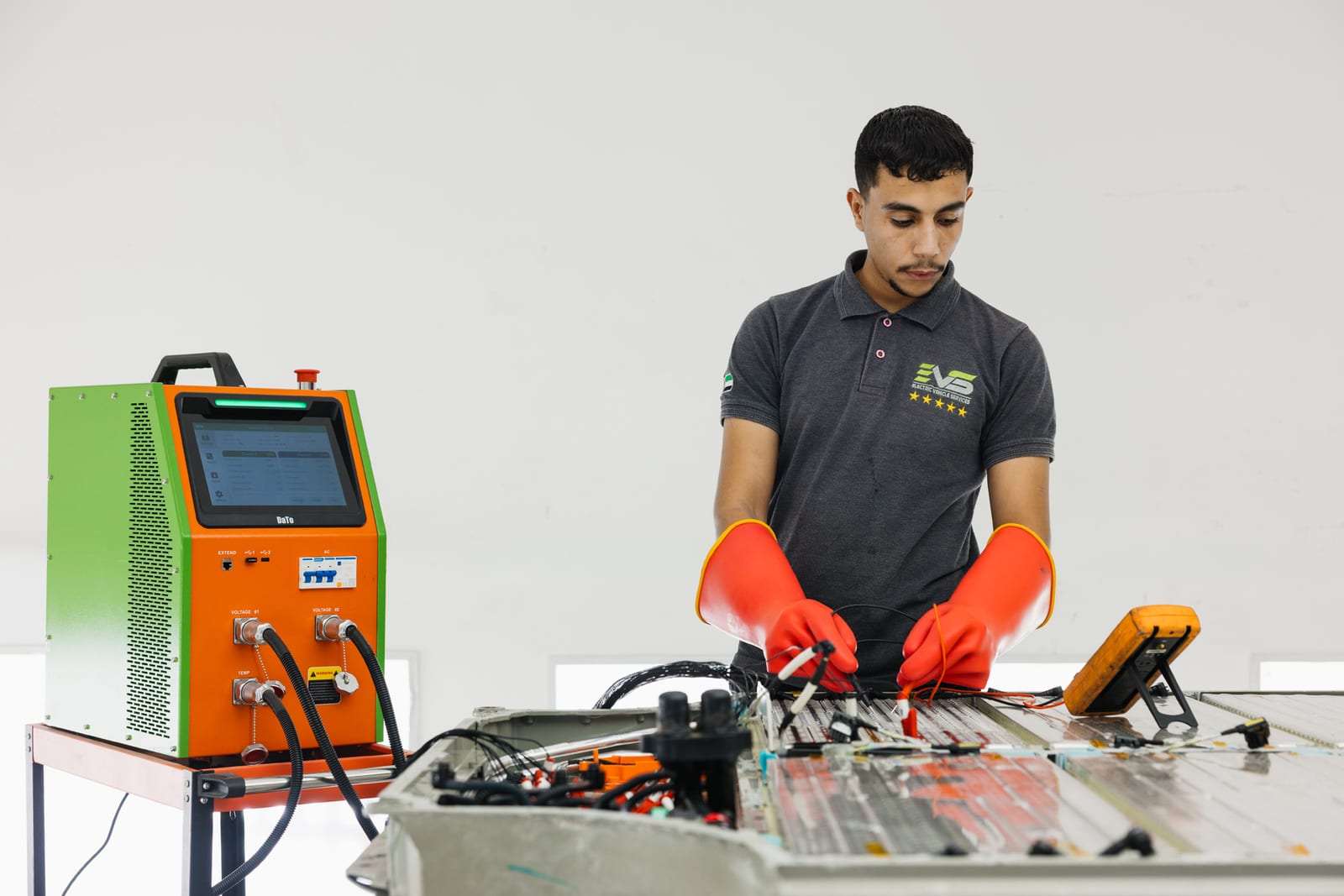
If you are evaluating ev technician training for a workshop, the real question is not whether your team can plug into a new diagnostic tool. It is whether your business can safely and profitably handle high-voltage work that general garages cannot touch. For EV service centres, that means building capability around people, process, equipment and evidence, not just adding a new charger in the corner.
The market is already moving towards specialist aftersales. As more plug-in vehicles age out of dealer-only support, the work shifts from simple servicing to battery assessment, isolation faults, thermal systems and collision triage. That is where a workshop either creates a defensible technical offer or stays a commodity repair shop.
High-voltage capability is the ability to diagnose, isolate and repair EV systems safely at voltages that require formal control measures, trained staff and purpose-built tooling. In practice, that includes on-board chargers, DC/DC converters, inverters, isolation faults, battery disconnect procedures and the ability to prove the vehicle is safe before work begins.
It is easy to underestimate the scope. A competent EV centre is not just handling a battery warning light. It is managing electrical risk, thermal risk, mechanical access, software-driven fault tracing and the documentation that insurers, fleets and dealer groups may ask for before they release a job.
That is why ev technician training cannot be treated as a one-off course. It needs to sit inside an operating model with standards, audits and repeatable procedures. A workshop may have strong conventional mechanics, but without the right controls it still does not have high-voltage capability.
A good training programme is layered. The first layer is safety, because everything else depends on it. Technicians must understand high-voltage awareness, isolation steps, personal protective equipment, lockout procedures and when a vehicle must be quarantined rather than worked on immediately.
The second layer is diagnostics. EV faults are often system-level rather than component-level, so technicians need to interpret live data, read isolation measurements, follow fault trees and test linked systems rather than swapping parts at speed. That matters when a problem sits in a charger, an inverter, a cooling circuit or a control unit rather than in the battery itself.
The third layer is repair authority. A workshop that wants to do more than triage needs technicians who can move from diagnosis to safe intervention. That means understanding battery removal and refit procedures, high-voltage interlock loops, coolant interactions, thermal management and post-repair validation.
A practical training pathway usually includes:
The goal is not only to pass a course. The goal is to make sure every technician can operate to the same standard on every shift, under time pressure, with a documented process behind them.
Training alone does not create capability. You need equipment that matches the work. A workshop may be able to handle low-complexity EV jobs with standard tools, but once it starts taking serious B2B contract work, the equipment list gets longer and more expensive to ignore.
At a minimum, an EV-ready bay needs insulated hand tools, high-voltage gloves and test equipment, a suitable lifting arrangement, battery handling support, and diagnostic hardware that can speak to the vehicle properly. If the workshop is doing battery health certification, it also needs a non-invasive state-of-health workflow that is accepted by dealers and insurers.
Beyond that, the important items are often the least glamorous. Thermal system tooling, coolant servicing equipment, battery insulation testers, current clamps, scan tools, calibration targets and secure storage for quarantined components all matter more than showroom-style fit-out. So does the ability to tag, isolate and document a vehicle properly before anyone begins work.
Here is a simple way to think about the equipment stack:
| Capability area | What the workshop needs | Why it matters |
|---|---|---|
| Safety control | PPE, insulated tools, lockout kit, isolation meters | Prevents unsafe contact with live systems |
| Diagnostics | OE-level scan tools, software access, fault tracing equipment | Finds the root cause rather than guessing |
| Battery work | Handling supports, lifting aids, insulated work area | Reduces risk during pack or module intervention |
| Thermal systems | Coolant equipment, pressure testing tools, temperature measurement | EV faults often involve heat management |
| ADAS and calibration | Camera calibration targets and alignment equipment | Repairs can invalidate driver assistance systems |
| Evidence and audit | Job records, photos, checklists, certificates | Supports fleets, insurers and quality control |
A workshop that tries to skip any one of these will usually feel the gap later, when a complex job comes in and the bay cannot close it efficiently.
High-voltage work is not only about the technician. The physical layout matters because it affects safety, cycle time and quality. A centre that is serious about EV service should treat the workshop as a controlled environment, not a generic repair hall with a few extra warning signs.
That means defining separate zones for intake, diagnosis, high-voltage work, battery quarantine, parts holding and final validation. If a battery pack is removed, there needs to be a clear path for moving it and storing it safely. If a vehicle is under investigation, it should not sit beside routine mechanical jobs where the process can be interrupted or confused.
For EVS-style hub and spoke operations, this matters even more. A flagship hub can carry deep capability, while local satellite centres handle routine work, inspection and triage. That structure only works when the layout and the workflow are disciplined enough to push the right job to the right site.
The key design principle is simple: reduce unnecessary movement and reduce unnecessary risk. Every extra trip across the workshop with an EV in an uncertain state adds delay and exposure.
One mistake is to think EV servicing is only about the battery and the orange cable. In reality, many of the most valuable jobs sit in the crossover between electrical, mechanical and digital systems. A workshop that only trains for one piece of the chain will miss work it could have won.
Thermal management is a good example. EV cooling circuits, heaters and heat pumps can create faults that look electrical but are actually thermal. If a technician does not understand the system as a whole, the diagnosis becomes slower and the car stays off road longer than it should.
ADAS is another. Camera calibration, sensor alignment and structural verification are now part of many repair decisions. A centre that can complete mechanical work but cannot validate the driver-assistance systems afterwards will lose jobs to a competitor that can.
This is also where battery health certification adds value. Dealers, insurers and lease companies want evidence, not assumptions. A trained team with the right tools can provide a non-invasive assessment that supports residual value decisions and helps turn a technical fault into a commercial case.
Most workshops should not try to launch all high-voltage capability on day one. A staged approach is safer and easier to manage. Start with the work you can do consistently, then add the next layer once the team, tools and process are stable.
A sensible sequence is:
This staged model reduces the chance of overpromising. It also helps a new franchise partner or workshop owner see where the next investment should go, rather than buying equipment simply because it looks specialised.
The commercial opportunity in EV aftersales is not just retail work. Fleet operators, leasing businesses and insurers need predictable cycle times, traceability and confidence that the vehicle can go back into service safely. They also want clear evidence when a battery, chassis or thermal issue affects value or downtime.
That is why training must be tied to standards. A job card alone is not enough. A serious workshop needs checklists, evidence packs, post-repair validation and the discipline to stop a job if the condition of the vehicle changes during inspection.
For many operators, this is the difference between being a general workshop that “also does EVs” and a centre that can win B2B contract work. Fleets do not buy promises. They buy uptime, consistency and documented outcomes.
EVS Worldwide approaches capability as part of a franchise model, not as an ad hoc workshop upgrade. That matters because the technical standard has to be repeatable across territories and across teams.
The model combines training, diagnostics software, central parts procurement, quality audits and workshop support. In the field, that means a partner is not trying to invent its own standards from scratch. It is working within a framework designed to support battery health certification, high-voltage diagnostics, thermal and charging system work, mechanical and ADAS repairs, and fleet and lease-return contracts.
The hub and spoke approach is equally important. Deep capability sits in flagship centres, while routine volume can be handled locally. That lets a territory scale without forcing every site to carry the full cost and complexity of the deepest technical work.
For prospective partners, the takeaway is straightforward: if your business is going to serve the out-of-warranty parc and B2B accounts, capability must be designed, not improvised. EVS exists to support that structure, alongside market intelligence that helps assess whether a given territory justifies the move. See the market intelligence reports and the franchise page for the operating model behind it.
The first mistake is buying equipment before deciding the work mix. A workshop should know whether it is targeting diagnostics, battery certification, fleet support or full-service capability. Without that clarity, capital gets tied up in tools that do not match demand.
The second mistake is training too few people. If only one technician knows the process, the operation has a bottleneck and a risk. Capability should be spread across the team so the business does not stop when one person is absent.
The third mistake is treating EV work as a side line. Customers in this segment are not looking for a garage that occasionally handles a high-voltage vehicle. They want a centre that has the process, evidence and confidence to take the job properly.
Common red flags include:
If those gaps exist, the workshop is not yet ready for serious EV aftersales work.
It depends on the starting point of the team and the scope of work you want to deliver. A technician who already understands modern diagnostics will usually need less time to reach a safe and useful standard than someone coming from basic mechanical repair alone. The better question is not duration, but whether the training is built around safety, diagnostics, controlled repair and ongoing supervision.
No. Not every team member needs to work on live or high-voltage systems, but the workshop does need enough trained people to avoid a single point of failure. Reception, triage and mechanical staff still need to understand the workflow, the safety boundaries and the documentation required for an EV job to move through the site correctly.
Yes, but it is harder to do consistently and to scale. A workshop can build capability independently if it has the right leadership, training partners and equipment discipline. The challenge is maintaining standards over time, especially when the work becomes more complex or when fleet and insurer accounts demand proof rather than informal experience.
Safety and diagnosis. If the team cannot quarantine a vehicle properly, de-energise it correctly and identify the fault chain with confidence, the rest of the offer is premature. Once that base is working, the workshop can add controlled repair, battery-related procedures and more advanced B2B services.
Because downtime and residual value are commercial issues, not just technical ones. Evidence packs show what was tested, what was found and what was repaired, which helps the customer approve the job and move the vehicle back into service. They also reduce disputes when a battery, thermal system or collision issue affects value.
Building high-voltage capability is not about becoming “EV ready” in a marketing sense. It is about deciding whether your workshop can credibly take the technical work that the market is beginning to release from dealer networks and general garages.
If you want that work, you need trained people, controlled processes, the right equipment and a layout that supports repeatable outcomes. You also need a commercial reason to do it, which is where territory research, B2B demand and an operating model matter as much as the tools.
For prospective franchise partners, that is the point of EVS Worldwide. The business is structured to help operators assess a territory, build the capability and run the centre as a serious aftersales business, not a side line. If you are evaluating a market and want the franchise pack and the market intelligence report for that territory, enquire about a territory.
01 / The research behind this
Fleet size, addressable service revenue, competition, incentives and a 90-day entry plan — free on request for qualified franchise enquiries.
02 / Related reading
22 Oct 2026 · 6 min read
Explore why battery health certification is crucial for EV resale value and customer trust in the automotive service sector.
15 Sept 2026 · 6 min read
Explore the crucial equipment, tooling, and technician qualifications needed for establishing a successful EV service centre in 2026.

23 Aug 2026
A dashboard range estimate is not a battery test. What a proper state-of-health measurement involves, and why the method matters more than the percentage.
03 / Not in your country yet?
Tell us your territory. We'll send the market research alongside the franchise pack and connect you with the team behind every EVS centre.