
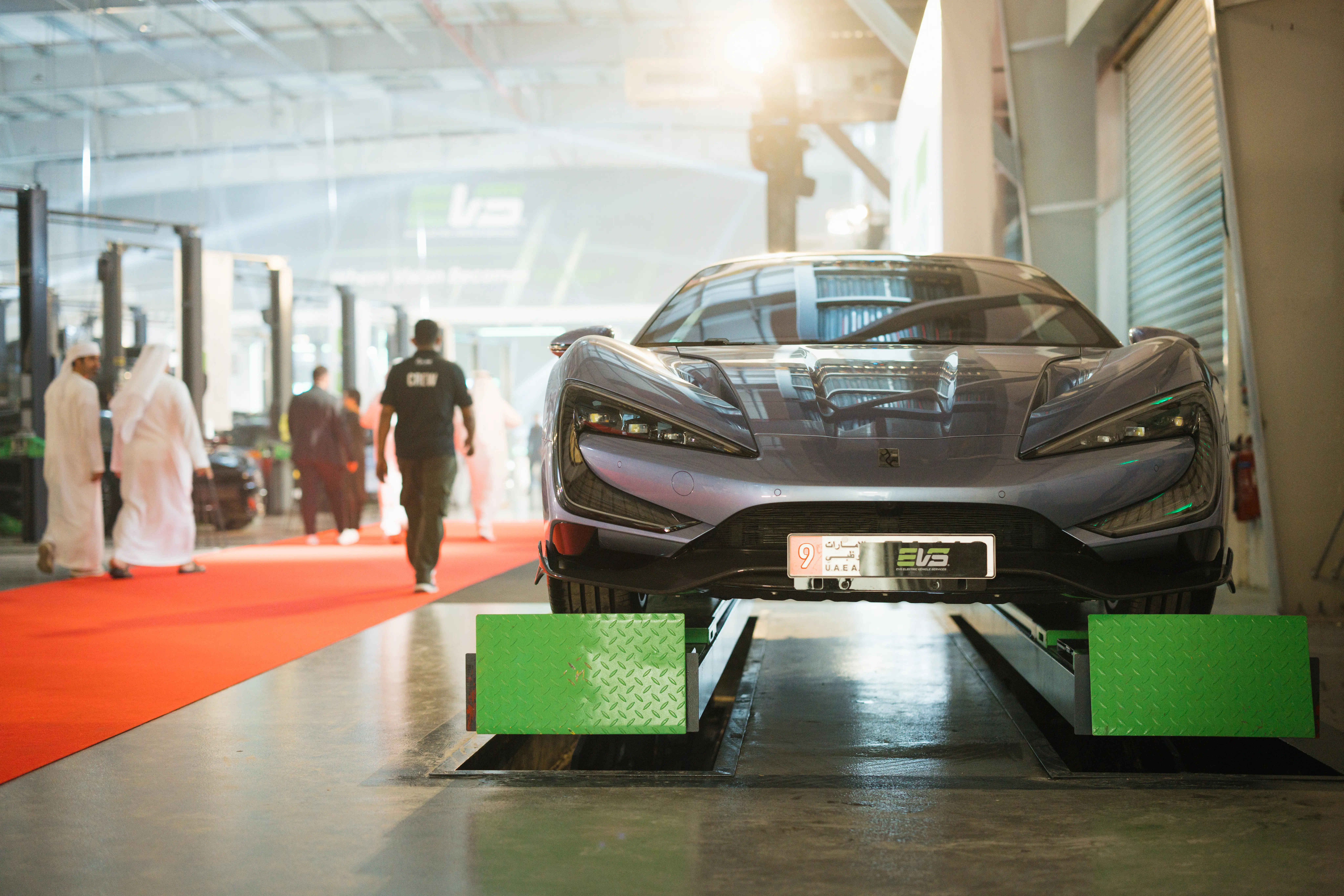
15 Sept 2026 · 6 min read
The Essential Capability Requirements for an EV Service Centre
Explore the crucial equipment, tooling, and technician qualifications needed for establishing a successful EV service centre in 2026.
EVS WorldwideRead
EVS Worldwide/Insights/Technical
A dashboard range estimate is not a battery test. What a proper state-of-health measurement involves, and why the method matters more than the percentage.

Ask what an EV's battery is worth and you will be quoted a percentage. 92%. 87%. But a state-of-health figure is only as good as the method behind it — and the methods vary wildly.
The range estimate on the dashboard is a guess built from recent driving. Drive gently for a week and it flatters the pack; drive hard into a headwind and it panics. Apps that read a single BMS register inherit whatever assumptions the manufacturer baked in — and manufacturers are not neutral parties in a warranty conversation.
A defensible SoH test compares usable capacity now against the pack's rated capacity, under controlled conditions:
Once the measurement is trustworthy, the bands are straightforward to act on:
| Measured SoH | What it means | Sensible action |
|---|---|---|
| 95–100% | As-new; normal first-year settling | Baseline it and drive |
| 88–94% | Healthy mid-life pack | Re-test in 12–24 months |
| 80–87% | Real degradation; range visibly down | Check cell spread; price it into any sale |
| 70–79% | Approaching most warranty thresholds | Warranty claim review before it lapses |
| Below 70% | End of automotive first life | Module repair or second-life pathways |
The bands only hold when the cell spread is inside tolerance. A pack averaging 90% with one weak parallel group is not a 90% pack — it is a repair booking.
Every used-EV transaction is a battery transaction. Fleets are learning to schedule replacement cycles on measured degradation instead of odometer readings. Insurers are starting to ask for certificates after quarter-panel repairs near pack casings. And private buyers — rightly — no longer accept "it seems fine".
That is why certified battery health testing sits at the centre of the EVS service menu in every market we operate. The percentage is the headline; the method is the product.
01 / The research behind this
Fleet size, addressable service revenue, competition, incentives and a 90-day entry plan — free on request for qualified franchise enquiries.
02 / Related reading
15 Sept 2026 · 6 min read
Explore the crucial equipment, tooling, and technician qualifications needed for establishing a successful EV service centre in 2026.
03 / Not in your country yet?
Tell us your territory. We'll send the market research alongside the franchise pack and connect you with the team behind every EVS centre.