Vietnam is becoming a more serious EV aftersales market, but the competitive picture is still uneven. For a prospective car repair franchise buyer, the real question is not whether EVs are arriving. It is whether the market is moving fast enough, and in the right places, to support specialist capability before the incumbent workshops and dealer networks close the gap.
That matters because EV aftersales does not behave like conventional repair. High-voltage diagnostics, battery evidence, thermal systems and software-led faults create a different service proposition. In Vietnam, as in many growth markets, the operators who understand the reachable servicing share and the ownership of aftersales are usually the ones best placed to win the territory.
Why Vietnam deserves attention from franchise buyers
Vietnam has become one of the more closely watched Southeast Asian markets for EV adoption and related infrastructure. For an operator evaluating a car repair franchise opportunity, that does not automatically mean an open field. It means the aftersales market is forming while OEMs, dealer groups, independents and specialist entrants are all trying to define who owns the work.
The first thing to understand is that EV aftersales demand does not appear evenly. It concentrates where vehicles are delivered, where fleets are concentrated, and where the charging and service ecosystem is already visible. That usually means major urban and commercial corridors first, with wider coverage following later.
For a franchise partner, this creates a territory question rather than a generic country question. The best entry point is not simply “Vietnam”, but the specific area where plug-in parc growth, workshop accessibility and commercial account density overlap.
The competitive landscape: who is already in the field
Vietnam’s EV aftersales competition can be grouped into four broad categories. Each one has a different effect on franchise opportunity.
1. OEM-backed dealer networks
Dealer networks are usually the first place EV owners and fleet operators go when the vehicle is new or still under warranty. In a market like Vietnam, they tend to hold the most visible aftersales work early on because they control the brand relationship, warranty processes and parts channels.
That creates an immediate barrier for independents. Even when the actual technical work is not complex, the customer may still default to the dealer because the process is already established.
For a specialist franchise, this is not necessarily a negative. It simply means the first commercial opportunity often sits outside routine retail servicing and towards evidence-led B2B work, such as battery health assessment, collision triage, fleet downtime reduction and lease-return inspections.
2. Independent workshops moving into EV capability
Vietnam has a large base of general repair businesses, many of which are assessing whether to add EV work. Some will invest in training and tools, but most will not be able to replicate specialist high-voltage capability quickly.
This is where a car repair franchise model can differentiate itself. A networked brand with standardised diagnostics, training, quality control and parts procurement is structurally different from a one-off workshop trying to adapt.
The challenge is timing. If independents move first in a territory, they can shape the market perception of who handles EV aftersales. If they move too slowly, the dealer groups keep the profitable work, and the independents get only the low-complexity overflow.
3. Service and tyre chains expanding into EV work
In many markets, multi-bay service chains try to capture EV maintenance because they already have scale, sites and brand familiarity. Vietnam is no exception in principle, even if the level of EV specialisation varies by operator.
Their advantage is footprint. Their weakness is depth. EV aftersales needs more than a bay and a scanner. It needs isolation protocols, trained technicians, battery evidence methods and an operating model that can support fault diagnosis without guesswork.
That means chains can participate, but not all of them can own the upper tier of the market. For a specialist franchise, that leaves room to position above the general chain and below the OEM dealer, particularly for work that needs independence and technical credibility.
4. New specialist entrants
A smaller but important category is the specialist EV entrant. These are businesses built specifically around electric-vehicle aftersales rather than adapted from combustion-era repair.
This category is the most relevant comparator for EVS Worldwide. It is also the one most likely to attract fleet, leasing and insurer accounts because it can offer evidence packs, uptime-led service and a cleaner technical proposition than a general workshop.
In Vietnam, specialist entrants will usually compete on trust, not just price. The businesses that win are the ones that can prove capability, not merely claim it.
What actually drives EV aftersales demand in Vietnam
The market is not driven by vehicle sales alone. A franchise partner evaluating Vietnam should look at four demand drivers together.
Plug-in parc growth
The size of the plug-in parc tells you how many vehicles exist, but not how much work is reachable. A large fleet on paper can still be poor territory if the vehicles sit inside closed dealer channels or concentrated corporate fleets that already have service arrangements.
That is why EVS Worldwide’s market intelligence framework matters. It asks not only how many plug-in vehicles exist, but how much of that parc is realistically serviceable by an independent or franchised operator.
Warranty expiry and out-of-warranty parc
The out-of-warranty parc is one of the most important openings for independents. Once vehicles move beyond manufacturer warranty, the owner’s willingness to consider a non-OEM repairer rises, provided the workshop can prove technical competence.
In Vietnam, as the EV parc matures, this is likely to become a stronger factor. The opportunity is not just more vehicles. It is the growing number of vehicles that can no longer be kept exclusively inside dealer aftersales.
Fleet, leasing and insurer demand
B2B demand is often the most bankable part of the market. Fleet operators want uptime, insurers want evidence, and lease companies want condition data at handover and return.
This is where specialist EV aftersales differs from consumer repair. A business customer is not buying a one-off fix. It is buying predictable cycle time, documentation and service consistency.
Regulation and access to work
Regulation can support or constrain the market. In some territories, safety procedures, technician requirements or repair liability considerations make it harder for general workshops to participate. In others, the rules are looser, but the market still self-sorts towards specialist capability because the risk is too high for ordinary repair channels.
A franchise buyer in Vietnam should not assume the market is open simply because the vehicles are visible. The practical question is which work can be done safely, legally and profitably by a non-OEM network.
How EV aftersales competition changes the business model
In a developing EV market, the winning workshop is not the one with the broadest menu. It is the one that can process the most commercially important work with the least friction.
That changes the economics in three ways.
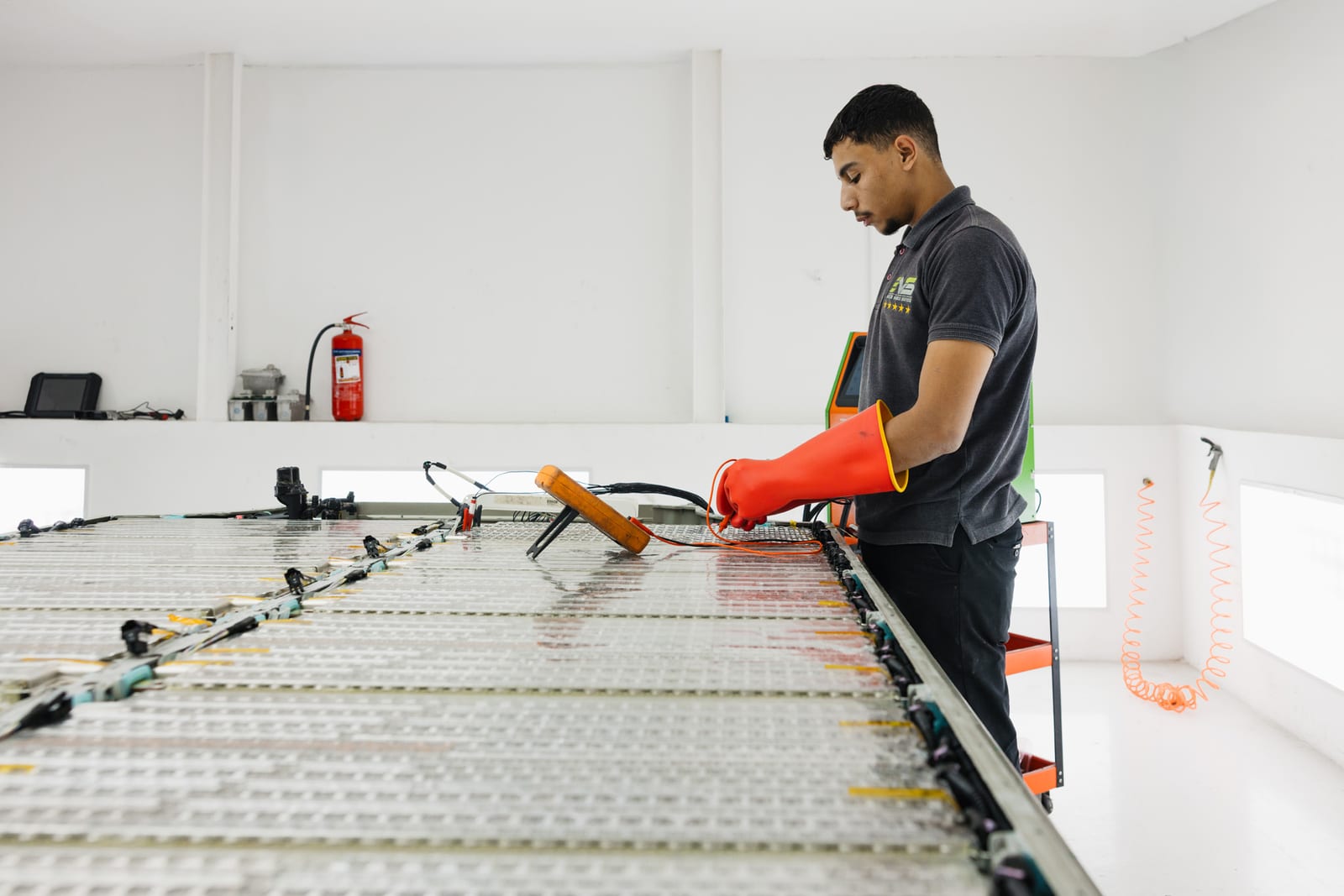
First, the workshop needs the right capability mix. High-voltage diagnostics, thermal systems, battery health certification and ADAS calibration are not separate niches. They are part of the same failure chain once the vehicle is out of the showroom phase.
Second, the business must decide where to focus. Not every centre needs to do everything. A hub and spoke model works better: deep capability in a flagship hub, routine work and intake handled by satellite sites.
Third, the sale is often not the repair itself. It is the evidence, the SLA and the trust. Fleet and insurer accounts rarely choose the cheapest workshop if the workshop cannot prove that the vehicle is safe, the battery is healthy, and the fault diagnosis is correct.
Where a specialist franchise can win in Vietnam
A car repair franchise built for EV aftersales should not try to outcompete dealer networks on every job. It should target the work that dealers often handle slowly, expensively or inconsistently.
The strongest opportunities are usually these:
- battery health certification for dealers, lease companies and insurers
- high-voltage diagnostics for charging faults, isolation faults and converter or inverter issues
- collision triage, including battery isolation and damage assessment
- mechanical and ADAS work that needs calibration and technical evidence
- fleet service contracts where uptime and fixed SLAs matter more than retail convenience
These services are useful because they sit between generic workshop capability and full OEM dealership capability. That middle space is where many markets remain underserved.
Vietnam is likely to reward operators that can be technically serious without being tied to one manufacturer. That independence is valuable to fleet buyers, lease companies and insurers, who want usable evidence rather than brand-only claims.
What to look for before entering a territory
A territory decision should be made on evidence, not optimism. The most useful diligence questions are straightforward.
| Question | Why it matters |
|---|
| How large is the plug-in parc in the target territory? | It sets the ceiling for addressable demand. |
| How much of that parc is actually reachable? | Many vehicles sit inside dealer or fleet-controlled channels. |
| Who owns the aftersales relationship today? | This tells you where the work is already locked up. |
| What work can independents legally and safely perform? | It defines the real service scope. |
| Where are the fleet and insurer accounts concentrated? | These customers can anchor year-one demand. |
| Are there technical skills and site options available? | Capability is often the bottleneck, not demand. |
This is exactly why EVS Worldwide publishes market-entry research alongside its franchise offer. A market can look promising in headlines and still be weak for a new entrant if the reachable servicing share is low or the incumbent ownership of aftersales is too strong.
For a territory-level view, start with the market intelligence reports and then assess whether the franchise model fits the market structure.
A lot of commentary about Vietnam focuses on EV sales momentum or infrastructure headlines. That is useful context, but it does not tell a franchise buyer where the service opportunity sits.
EV aftersales is a commercial puzzle with four pieces: parc size, reachable share, incumbent control and legal constraints. If one of those pieces is weak, the opportunity changes materially.
That is why EVS Worldwide’s reports are built on primary sources: national vehicle authorities for registration and fleet data, the relevant regulator or grid operator for charging figures, and primary legislation and government programmes for legal and incentive context. The objective is not to guess. It is to compare territories on the same basis.
For a prospective franchise partner, that is more useful than broad market commentary. It helps decide whether Vietnam is ready for a specialist EV centre now, or whether the right move is to wait for a specific city, corridor or customer segment.
What EVS Worldwide brings to a market like Vietnam
EVS Worldwide is not a consumer repair brand. It franchises specialist EV service centres and supports partners with the operating model behind them.
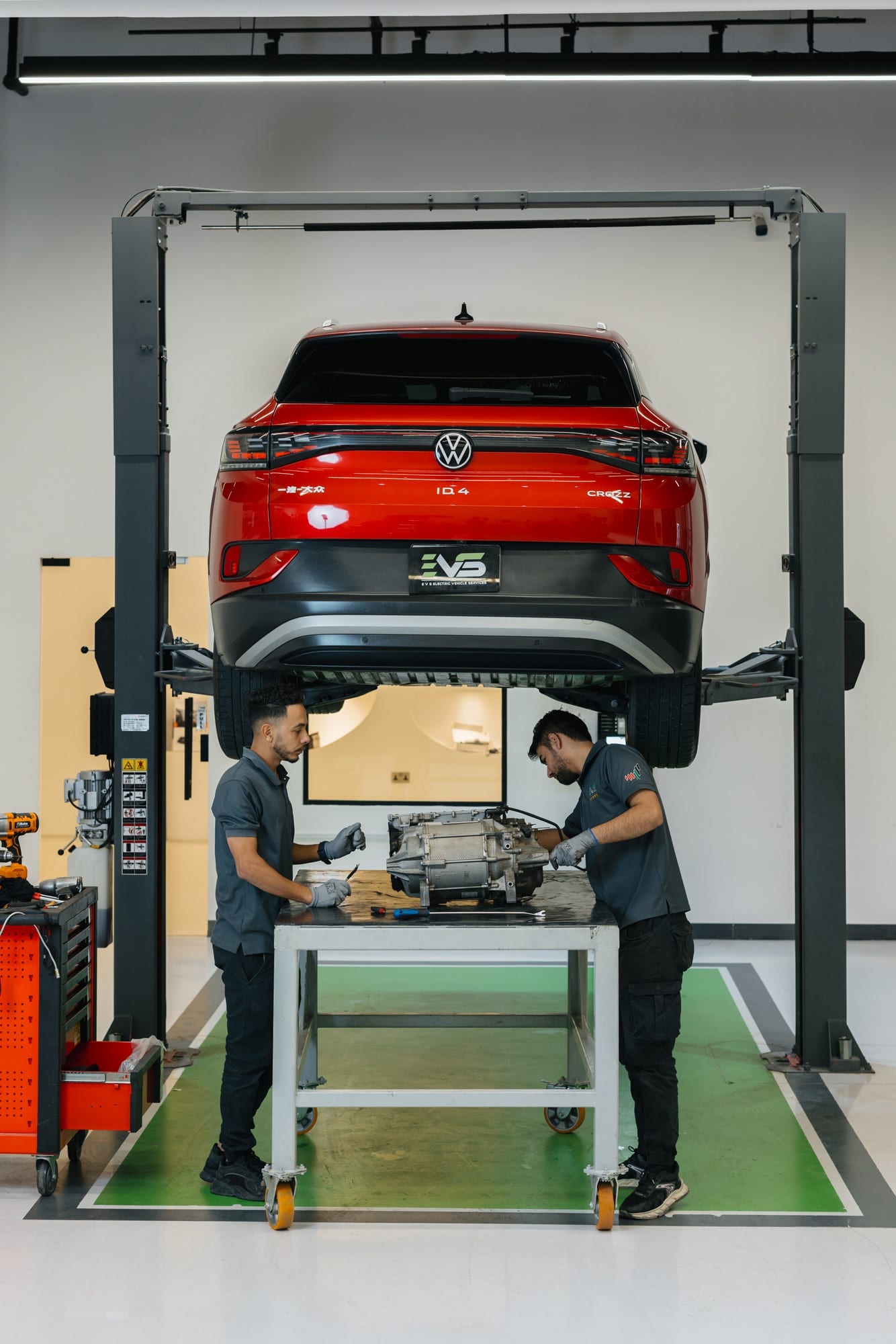
That matters in a market like Vietnam because capability has to be built deliberately. EVS centres are designed for battery health certification, high-voltage diagnostics, thermal and charging systems, mechanical and ADAS work, collision triage and fleet and lease-return contracts.
The network model is also relevant. A hub and spoke structure allows a franchise partner to concentrate the hardest work in one centre while using satellite capacity for routine volume. That is usually a better fit for a developing market than trying to duplicate the same full capability everywhere from day one.
Partners also receive training, technical support, diagnostics software, central parts procurement, quality audits, and workshop setup and marketing support. In a market like Vietnam, that can reduce the gap between market demand and workshop readiness.
FAQ
Is Vietnam already ready for a specialist EV service centre?
It may be ready in selected territories, but not uniformly across the country. The right answer depends on plug-in parc concentration, reachable servicing share, the strength of dealer ownership and the availability of fleet and insurer demand. A general national label is not enough for an entry decision.
Can a general workshop convert into EV aftersales without a franchise?
In principle, yes, but the practical difficulty is significant. High-voltage diagnostics, battery evidence, ADAS calibration and safety procedures require equipment, training and operating discipline that many general workshops do not have in place. A franchise can shorten that path by providing a proven model and technical support.
What makes EV aftersales different from conventional repair?
The core difference is that EV faults often involve electrical systems, software, thermal management and battery condition rather than only mechanical wear. That changes the diagnostic process and the risk profile. It also creates more demand for documented evidence when the customer is a fleet, insurer or lease company.
Why do fleets and insurers matter so much in this market?
Because they bring recurring B2B contract work rather than one-off retail jobs. They also care about uptime, traceability and service standards, which makes them more receptive to specialist centres with clear processes and SLA discipline.
How does EVS Worldwide evaluate whether a territory is worth entering?
Every market is assessed against the same four questions: plug-in fleet size, reachable servicing share, incumbent ownership of aftersales, and legal requirements. That consistency allows territory comparisons across 134 tracked markets and helps a prospective franchise partner decide whether the opportunity is real.
The commercial implication for operators
Vietnam is not a market to approach with generic EV optimism. It is a market to assess for service ownership.
If dealer networks still hold most of the work and independents remain technically constrained, then a specialist franchise can position around the jobs that others cannot or will not do well. If local independents are moving quickly, then the value lies in brand, training, quality and B2B account access.
Either way, the competitive landscape matters more than the headline EV story. For a car repair franchise buyer, that is the difference between entering a market with a clear role and entering one where the service proposition is still being claimed by someone else.
If you are evaluating Vietnam as a territory, the next step is to request the franchise pack and the market intelligence report for the market you are considering. Enquire about a territory and the EVS team will share the decision-grade material for your assessment.