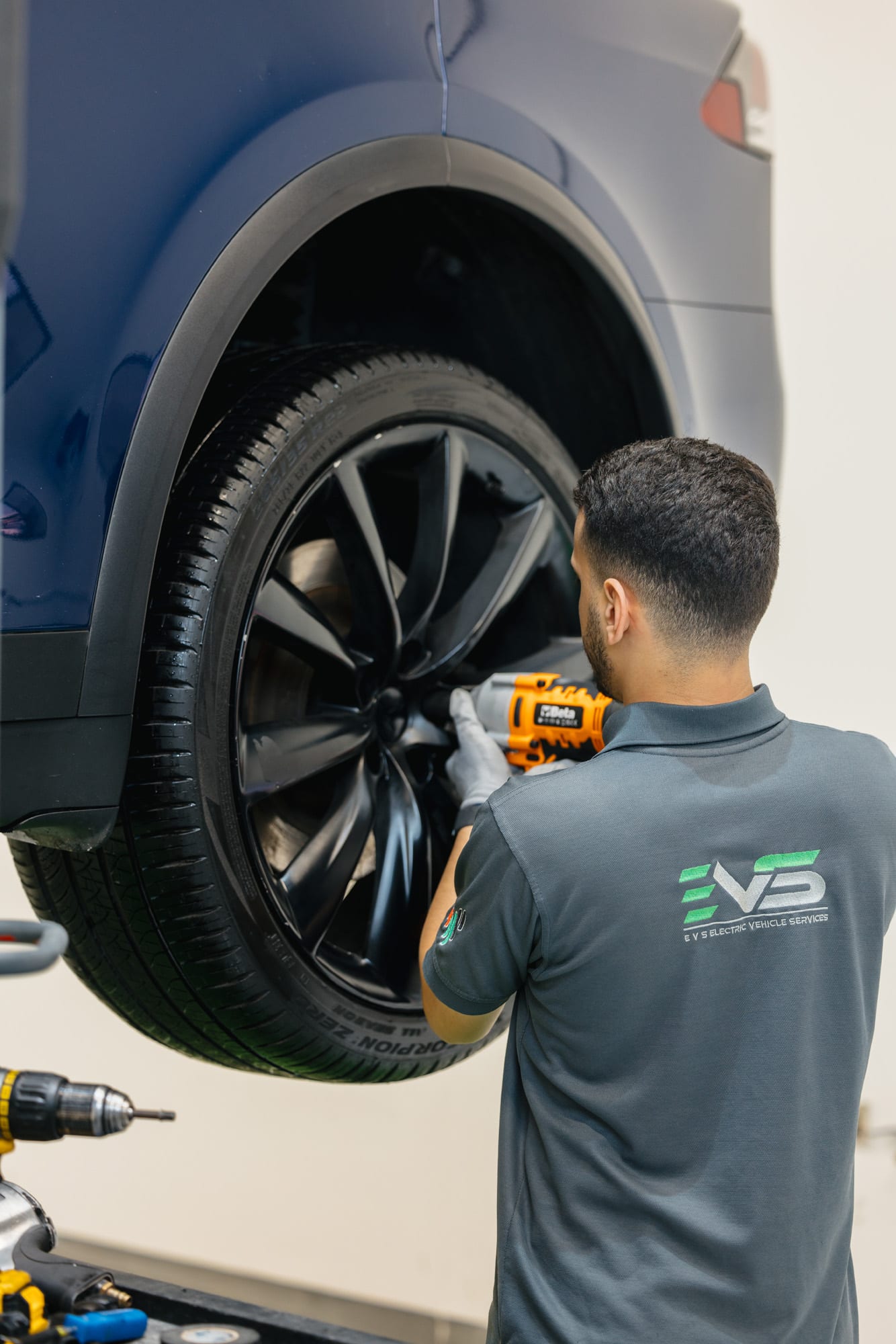
EV service centre Saudi Arabia: the short answer
A specialist EV service centre Saudi Arabia can be viable now, but only in the right territory and with the right operating model. The decision is not whether electric vehicles are coming. It is whether the local plug-in parc, reachable servicing share, competitor structure and regulatory context are enough to support specialist aftersales before the market becomes crowded.
That is the question EVS Worldwide’s Saudi Arabia market report is designed to answer. It does not ask whether the market is growing in theory. It asks whether an automotive group, dealer principal, workshop owner or investor can underwrite a service centre with evidence rather than assumption. For Saudi Arabia, that means looking at the present serviceable base, where the work is likely to come from, and which parts of the market are still not being served properly.
Why viability is not the same as EV adoption
A common mistake in market entry analysis is to treat EV sales growth as the whole story. It is not. A service centre needs a reachable base of vehicles that actually need aftersales work, not just a headline count of electric cars in the country.
For a specialist EV aftersales business, three things matter more than general optimism:
- the size of the plug-in parc already on the road
- how much of that parc is realistically reachable from one territory
- whether current aftersales players have the capability or incentive to serve it properly
Saudi Arabia is relevant because it is not a hypothetical future EV market. It is already moving, and the aftersales problem is arriving before the whole market is mature. That creates a window for a specialist operator, particularly one able to combine battery health certification, high-voltage diagnostics and B2B contract work for fleet, leasing and insurer accounts.
The right question is therefore not “is Saudi Arabia an EV market yet?”. The right question is “is there enough addressable aftersales demand now to justify a dedicated business model, and where?”.
What the Saudi Arabia market report is actually testing
EVS Worldwide’s Saudi Arabia market report is built around the same four questions used across all 134 tracked markets. That consistency matters because it lets operators compare countries without changing the method each time.
The report assesses:
- Plug-in fleet size
- Reachable servicing share
- Incumbent ownership of aftersales
- Legal requirements
That framework matters because each element changes the business case. A market can look large on paper and still be poor for entry if aftersales is locked up by incumbents. A market can also look smaller than a headline number suggests and still be attractive if the reachable pool is concentrated and underserved.
For a franchise buyer, this is the level of diligence that matters. A board does not need a generic EV narrative. It needs a territory-level answer to whether enough work can be won, and how defensible that work is once the market tightens.
The real demand signal is the addressable service pool
The most useful measure in a market like Saudi Arabia is not the total number of electric vehicles. It is the addressable service pool: the portion of the parc a specialist centre can realistically win.
That pool is shaped by several commercial filters:
- whether the vehicle is still inside manufacturer warranty
- whether the owner is a dealer, fleet operator, lease company or independent end user business
- whether the vehicle needs high-voltage diagnostics or battery evidence
- whether the job is being retained by a dealer network or pushed out to the open aftersales market
In practice, the out-of-warranty parc is where specialist workshops begin to matter. Once the vehicle is beyond the original dealer protection window, the customer becomes more open to a specialist that can prove competence, turnaround time and evidence quality.
That does not mean every EV becomes open work overnight. It means the addressable share grows unevenly, and the operator who understands which vehicles and which accounts are reachable can build a better territory strategy than the operator who only counts registrations.
Where the competitor gap still exists
The other part of the Saudi Arabia question is competitive structure. If incumbent ownership of aftersales is already tight, an entrant needs a sharper wedge. If there are visible gaps in specialist EV capability, there is room for a differentiated model.
In many markets, the first gap is not the absence of workshops. It is the absence of specialist EV capability inside ordinary workshops. High-voltage diagnostics, battery health certification, isolation fault tracing, thermal system work and camera calibration require tools, processes and training that most general repair businesses do not have.
That matters in Saudi Arabia because the market is not being tested on retail footfall. It is being tested on business customers and technically complex work. A specialist EV service centre has a stronger case if it can do work that a general garage cannot safely or credibly do, and if it can support fleet and insurer accounts with repeatable evidence.
The commercial gap is usually clearest in these segments:
- fleet and leasing: uptime, SLA discipline and predictable cycle time
- insurers: battery evidence, collision triage and damage assessment
- body shops: battery isolation and post-collision technical handling
- independent workshops: overflow or referral work they cannot safely take in-house
That is where a specialist operator earns a reason to exist. Not by competing on generic servicing, but by owning the complex aftersales work that the wider market cannot yet absorb.
What a viable Saudi Arabia entry model looks like
The viability of an EV service centre Saudi Arabia opportunity depends on the operating model, not only the market itself. A single-site, retail-led workshop model is usually the wrong first assumption. The better fit is often a hub-and-spoke structure.
In that model, the flagship hub carries the most complex work:
- battery health certification
- high-voltage diagnostics
- thermal and charging systems
- ADAS calibration and collision triage
- technical escalation and evidence packs
Local satellite centres handle routine volume and relationship coverage. This matters in Saudi Arabia because territory size and customer distribution can make a single location too thin if it tries to do everything.
A viable operator also needs to think in B2B terms from day one. The demand profile is not consumer walk-ins. It is contract work from fleet, lease and insurance customers, plus referral work from workshops and body shops that lack specialist capability.
That means the centre must be built around operational discipline, not showroom language. The reader should ask:
- Can the site handle the right mix of jobs?
- Is there sufficient technician depth for high-voltage work?
- Can the business produce evidence that fleet and insurer clients will accept?
- Can the territory generate enough repeat work to justify the set-up?
Those are the practical questions that convert a market report into an investment decision.
What EVS means by specialist capability
Specialist EV aftersales is not a branding exercise. It is a defined technical stack.
At EVS Worldwide, an EV service centre is designed to deliver:
- battery health certification using non-invasive testing accepted by dealers and insurers
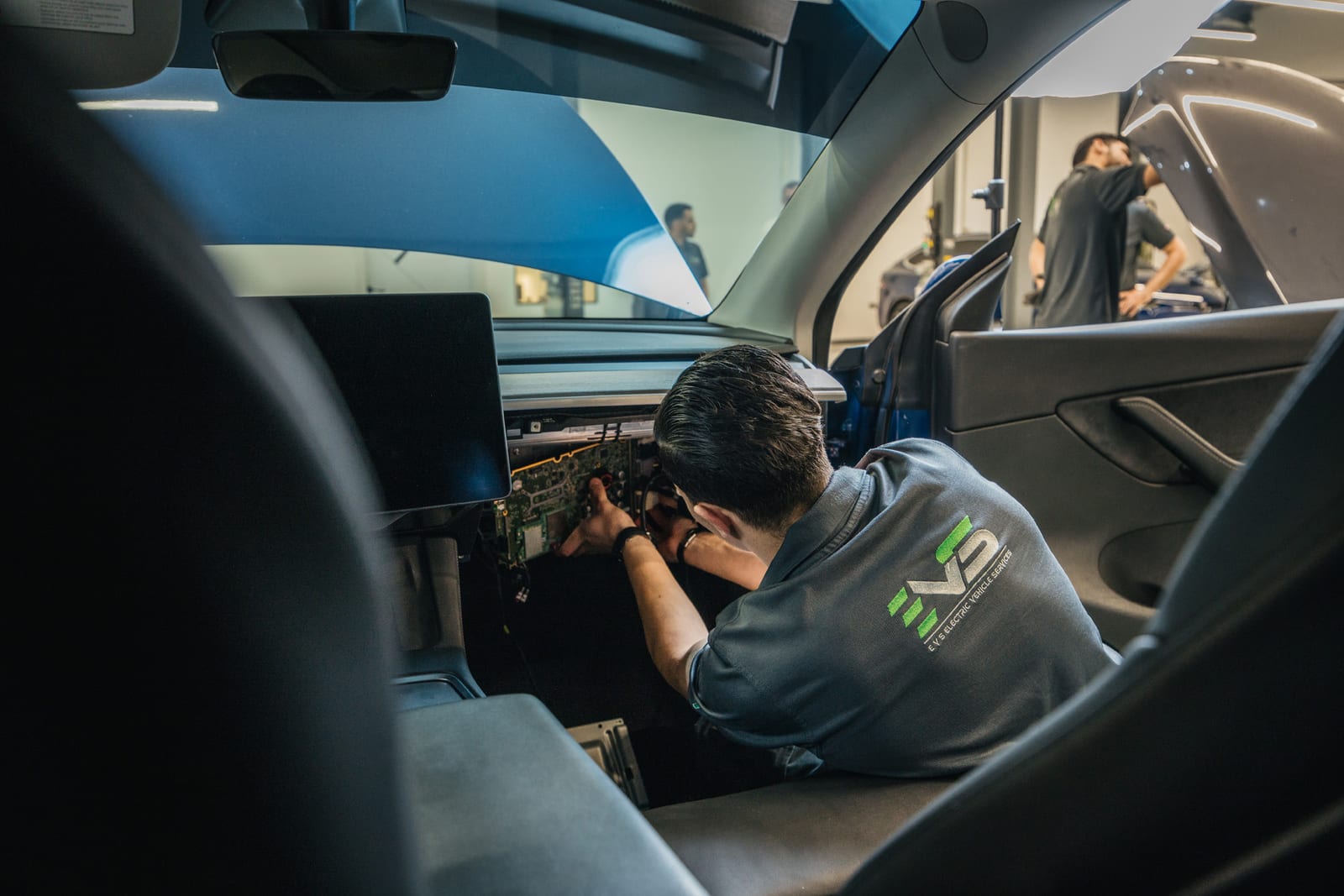
- high-voltage diagnostics for chargers, DC/DC converters, inverters and isolation faults
- thermal and charging system work including heat pumps and cooling circuits
- mechanical and ADAS work including camera calibration
- collision triage with battery isolation and damage assessment
- fleet and lease-return contracts with uptime guarantees and fixed SLAs
That list matters because it shows why a specialist model is not interchangeable with a general workshop. High-voltage capability is not simply another line on a service menu. It is a safety, training and process issue.
For a Saudi Arabia entrant, the operational lesson is simple: if the centre cannot handle the technical work that other workshops cannot, it will be forced into price competition on ordinary jobs. That is the wrong place to be.
When Saudi Arabia looks attractive, and when it does not
Saudi Arabia begins to look attractive when the following are true:
- the plug-in parc in the territory is large enough to support a specialist workflow
- the reachable service pool is concentrated enough to be captured efficiently
- dealer networks are not covering the specialist aftersales need fully
- fleet, leasing and insurer demand exists or is emerging
- the operator can hire and train technicians for high-voltage work
It looks less attractive when the market is still too fragmented, when the reachable share is thin, or when the only available work would be low-value routine servicing that any competent workshop can copy.
This is why EVS publishes market intelligence rather than broad commentary. Saudi Arabia may be right for one operator and wrong for another, depending on their territory, site access, technical ambition and ability to win B2B contracts.
The same report can produce two different decisions. A dealer group with existing infrastructure may see a credible expansion route. A small workshop without access to technicians, tooling or contract channels may see a market that is not yet ready for their model.
What the decision committee should ask before committing
If you are evaluating Saudi Arabia as a franchise or investment territory, the right diligence questions are specific.
Ask whether the market report answers these points clearly:
- How large is the current plug-in parc in the target territory?
- What portion of that parc is realistically reachable for a specialist centre?
- Who currently owns the aftersales relationship?
- Where are the capability gaps in the market?
- Which customer types are likely to buy first: fleets, insurers, body shops or independents?
- What legal or compliance requirements affect the model?
Those questions matter more than a broad headline about EV growth. They get to the actual economics of entry: what work is available, who controls it, and how hard it will be to displace or win.
If the report shows that the accessible service pool is thin and the competitor landscape is already closed, the answer may be to wait or choose another territory. If it shows a reachable, underserved base with growing complexity in the parc, the case for entry becomes stronger.
How EVS Worldwide helps a partner read the market
EVS Worldwide is not just a franchisor; it is also a market intelligence publisher. That matters because the business case for a new EV aftersales territory should be based on evidence, not enthusiasm.
For Saudi Arabia and other markets, EVS combines:
- 184 market reports across 134 tracked markets
- a consistent four-question methodology
- primary-source research using national vehicle authorities, regulators, grid operators, legislation and government programmes
- an operating model already proven across 12 centres in 4 countries
For a prospective franchise partner, that does two things. First, it reduces the guesswork around whether a territory is worth serious consideration. Second, it gives the operator a service model that is already designed around real B2B demand rather than retail assumptions.
The value is not in saying every market is ready. The value is in showing which markets are ready enough, and under what conditions.
FAQ
Is Saudi Arabia already ready for a specialist EV service centre?
In some territories, yes. In others, not yet. The answer depends on the size of the plug-in parc, the reachable service pool and the competitor structure inside the specific territory, which is why a country-wide headline is less useful than a market report built for the decision.
What kind of work drives demand first?
The first demand usually comes from B2B work rather than retail. Fleet, leasing, insurer and body shop accounts are often the most important early channels because they need uptime, evidence, technical triage and reliable turnaround rather than basic servicing alone.
Why does reachable servicing share matter more than total EV numbers?
Because not every electric vehicle in a country is available to an independent specialist. Many are still retained by dealer networks, still in warranty, or not yet in the right customer segment. Reachable servicing share is the figure that tells you how much work is actually contestable.
Can a general workshop just add EV work and compete?
Some general workshops can add limited EV capability, but specialist work is harder to copy than many operators expect. High-voltage diagnostics, battery evidence, ADAS calibration and controlled collision triage require training, tooling, process control and technical support. Without that, the workshop is usually restricted to a narrow set of jobs.
Where should a partner start if they are interested in Saudi Arabia?
Start with the market report and the franchise pack. That gives you the territory-level evidence and the operating model side by side, so you can decide whether the opportunity fits your capital, site access and technical ambition before you move further.
The commercial conclusion
Saudi Arabia can support a specialist EV aftersales business, but not everywhere and not in every form. The viable entry is the one that matches the actual service pool, not the optimistic one. For an automotive group or investor, the decision is whether the territory has enough reachable demand, enough unmet technical complexity and enough B2B pull to justify a dedicated centre now.
If you want the territory-level evidence, review the Saudi Arabia market report and then explore the franchise opportunity. If the numbers and the operating model both fit, enquire about a territory and request the franchise pack and market intelligence report for your target market.